
2026-02-03 Middle powers in a crumbling order
The international order is a dry-stone wall. The great powers are the large structural stones and the middle powers are the chinking stones.

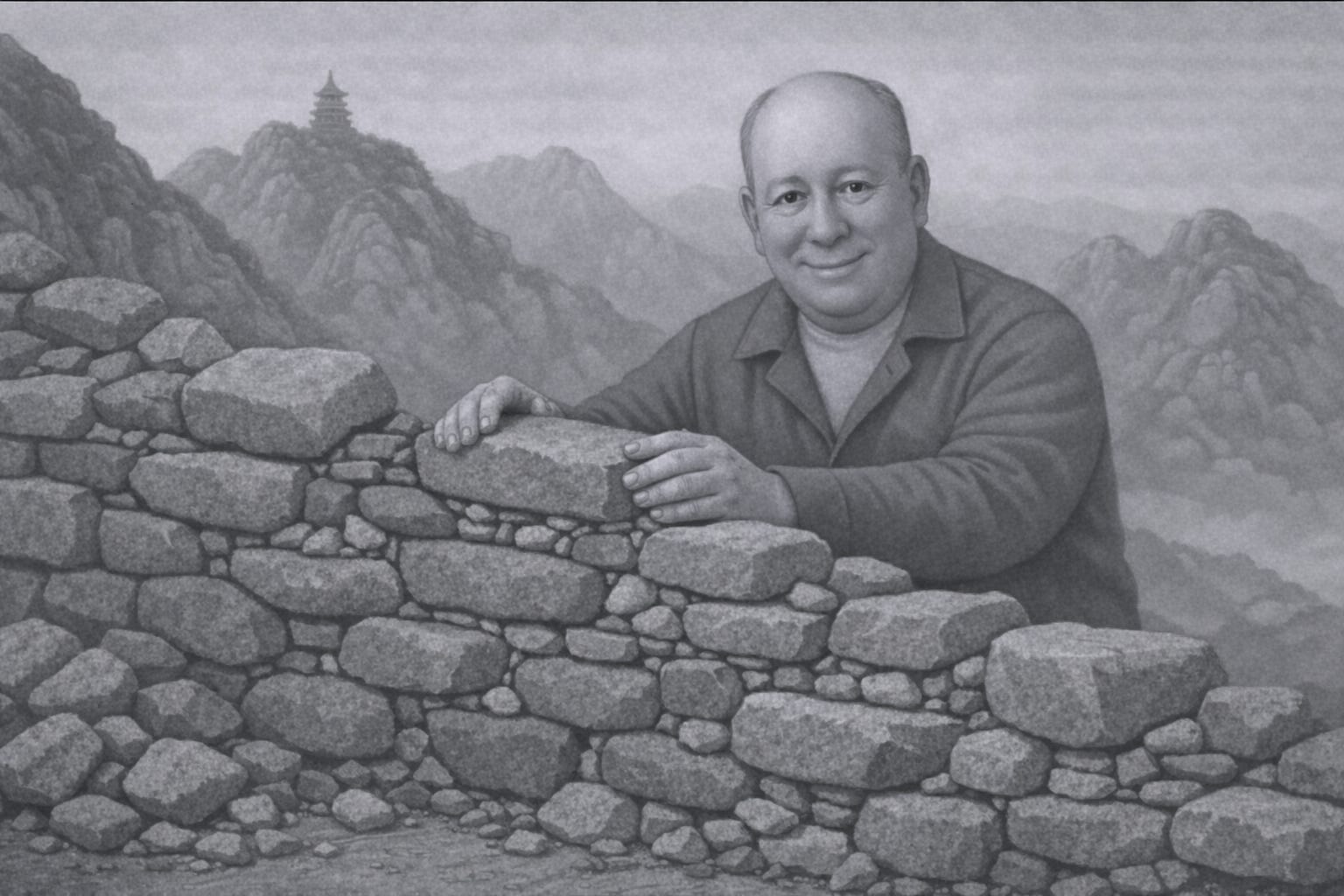
In the center of Seoul on Bukhan Mountain, you can find Bukhanseong, a historic mountain fortress, constructed and repeatedly rebuilt over centuries as a wartime redoubt protecting the capital. Today, around 12 kilometers of dry-stone wall still winds around the mountain where the fort once stood.
Korean dry-stone walls are built by fitting stones together without mortar, relying on weight, friction, and precise placement for strength and durability. The large structural stones are packed and stabilized with smaller stones, known as chinking or pinning stones. These chinking stones are wedged into gaps to stabilize and solidify the wall. The end result is a wall that can last centuries - or as the chinking stones are removed, crumble in a heap.
There’s a parallel in international relations. The international order is a dry-stone wall. The great powers are the large structural stones and the middle powers are the chinking stones.
Donald Trump has steadily removed the chinking stones of the US-led international order.
Sooner or later, the dry-stone wall of international order will crumble of its own accord.
Hopes that it can be steadied, or that middle powers can play a role in steadying it, are misguided.
Just like chinking stones, middle powers do not make the wall. They merely support it and hold it in place. They play important roles for certain - they give legitimacy, they facilitate, they coordinate, they can act as bridge builders, and can act as momentum builders - but they can never act alone.
A wall made of chinking stones alone can reach a great height, but it will never be solid. Their different shapes and sizes and their different physical properties don’t allow them to stay together indefinitely. A chinking stone wall will fall as soon as the weather changes.
Many academics miss the metaphor of the dry-stone wall. They’re stuck on the idea that middle powers can act by themselves and counter great power malfeasance. Middle powers have never acted by themselves - and they’re less likely to do so now than ever before.
In the modern era, there were four criteria for the success of any middle power initiative:
Capacity. A strong, well-financed, and well-trained bureaucracy.
Credibility. A diplomatic reputation marked by competence and Independence.
Timing. An international environment calling for a solution - the ripeness of the diplomatic fruit.
Great power support. The support or at least acquiescence of a great power, preferably the dominant great power.
To serve as an example, contrast Australia during the formation of APEC and during the failed formation of Kevin Rudd’s Asia Pacific Community (APC). The former benefited from the largest ever Department of Foreign Affairs and Trade after its recent amalgamation, the latter after ten years of horrendous cuts; the former started with six years of steady presence on the international scene, the latter after ten years of lackey leadership and one year of upstart hullaboo with a hundred and one new initiatives; the former started at a time when great powers recognized the need for alternatives to closed regionalism, the latter amidst disarray; the former secured support of the US, the latter secured none.
No contemporary middle powers can act in a way that demonstrates these criteria in their diplomacy. Australia and Canada have bureaucracies that are weak, poorly trained, and decimated by decades of funding cuts and training lapses - Australia even stopped supporting the Australian National University’s College of Diplomacy! Australia, Canada, and European middle powers have as much credibility as a vampire wanting to give blood at the blood bank. As for timing—and any prospect of great power support—Trump has put paid to it.
Middle powers are for want of a better word - f$%ked.
This leads to the question faced by many middle powers: if they can no longer save the crumbling stone dry-wall of the US-led international order, what should they do?
The smart middle power would ensure it is able to play a formative role as the next dry-stone wall is built. Middle power states that played a formative role in the building of international orders secured advantage from the Peace of Westphalia to the Vienna Congress and on to the United Nations.
Of course, when you’re a small stone buttressing a much larger stone, it ain’t easy to shift positions and start buttressing a different larger stone.
Over the next decade, each middle power will need to need to rethink its strategy. Does middle power South Korea continue to let itself be tied to a reckless and increasingly dangerous US or does it accept its place in its regional order? Does middle power Australia continue to seek safety and security within a weakened and pointless alliance or does it seek economic well-being and predictability within the emerging Chinese-led regional order? Does middle power Canada continue to try to pin fissures as the wall crumbles around it, or does it seek alternatives?
Being the outsider or even the target of the dominant state in an international order is not easy.
Think of the one middle power that has largely been neglected by middle power scholars - Iran. Iran is a middle power. It has demonstrated all the characteristics of middle power diplomacy: activist and innovative diplomacy, niche specialization, coalition building, and even good international citizenship (dependent on your point of view). Its initiatives often had capacity, credibility and timing - but it never attracted the support or acquiescence of a great power. Will South Korea, Australia, or Canada one day struggle like Iran in a post US-led international order?
While academics dream about new middle power coalitions to counter great power excesses, the reality on the ground is already moving. States in BRICS and across Southeast Asia are preparing for the building of the post US-led international order. If the US strikes Iran as is largely expected, the wall will crumble much faster than anticipated.
South Korea, Australia, and Canada must rethink their strategies before they’re brought down with the crumbling wall.
In international politics, as on Bukhan Mountain, survival belongs not to those who prop up failing stones, but to those who understand when a wall has reached the end of its life—and prepare, quietly and deliberately, for the next one.
◆◆◆