
Blaming Trump and Israel for America's woes
Blaming Trump and Israel is easier than accepting the crisis stems from the exhaustion of the very assumptions upon which modern America was built

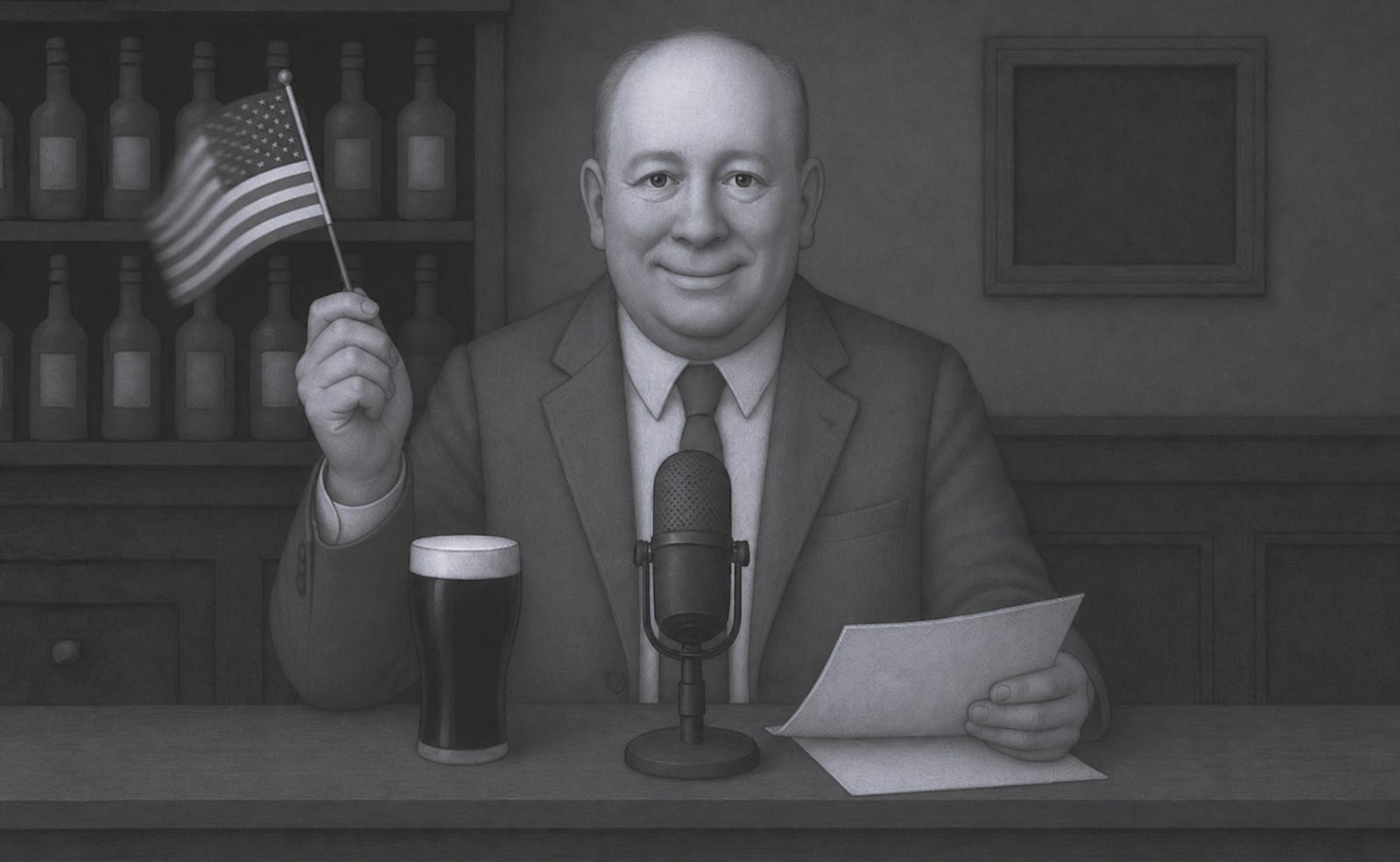
If you watch any alternative media, you start to notice a fuzzy but pretty distinct narrative: the Iran conflict is a debacle, and it’s Israel and Trump’s fault. Here we have one complete and two half-truths passed of as an explanation, directing anger not towards an American system that has failed, but rather at foreign manipulation and a single, easy to criticize, domestic nemesis.
“Alternative media” is a slippery term. It encompasses an unruly ecosystem of independent podcasts, YouTube commentators, Substack writers, X personalities, livestreamers, and self-styled dissident analysts who position themselves against what they describe as the corporate or establishment press. Some are genuinely independent; others are simply partisan entrepreneurs feeding niche audiences.
Examples in the international relations space include The Grayzone; Dialogue Works; Antiwar.Com; Judging Freedom; The Peacemonger; Glen Diesen; The Duran; UnHerd; and Deep Dive. Why, you could even describe this paltry little blog as one of its grimier, often ignored, text-only back alleys.
What unites them is less ideology than posture: a belief that mainstream institutions conceal, distort, or manufacture consensus. Over the past decade, the alternative media space has become increasingly influential precisely because legacy media credibility has eroded.
They routinely feature expert opinion, those that you will rarely hear on the BBC, CNN, FOX, or CNBC. These experts though are well respected: Colonel Douglas Macgregor, Ambassador Chas Freeman, John Mearsheimer, Jeffrey Sachs, Lieutenant-Colonel Karen Kwiatowski, Phil Giraldi, Scott Ritter, Larry Johnson, and Ray McGovern. They’ve served in the military and government (and academia), and have, for one reason or another, chosen to highlight what they see as a government that has lost its way.
Personally, I love watching them on long commutes across islands from my little fishing village to more metropolitan centres. It is refreshing to hear voices willing to question mainstream assumptions. Yet even within alternative media, there is often an understandable tendency to conform to a different kind of orthodoxy—to fit a narrative rather than simply follow the argument wherever it leads.
Like any media narrative that must compete within a narrow market, there’s a need for simple narratives that satisfies the audience.
When that audience is largely American and patriotic, the deeper structural failures within American power, strategy, and institutional culture are sidelined, and instead narratives gravitate towards emotionally satisfying explanations centered on villains, conspiracies, and betrayal.
Within that framework, there’s a tendency for the Iran debacle to be reduced to a story of reckless personalities and foreign manipulation.
The argument goes something like this: Donald Trump, driven by a narcissistic ego, impulsiveness, theatricality, greed, and maybe compromising blackmail pics, allowed himself to be pulled into confrontation by Benjamin Netanyahu and the strategic interests of Israel. Washington, in this telling, was not acting according to broader structural pressures, institutional momentum, alliance-system dynamics, or long-term strategic decline, but because a single American leader was manipulated by a particularly aggressive ally.
You’d probably find a least a few examples of this on my own pages. It’s an easy rut to fall into.
The Iran debacle therefore becomes personalized and externalized: blame Donald Trump for being vain or impulsive, blame Israel for encouraging escalation, and blame the broader American system only insofar as it is supposedly distorted by lobbying networks and campaign finance structures.
What largely escapes scrutiny are deeper features of American society itself: the strategic culture that normalizes global primacy, the ideological assumptions through which Washington interprets the world, and the economic model that intertwines military power, finance, and political influence into a self-reinforcing system.
Sometimes they’re touched upon with a side statement like “why are we waging war when people are sleeping in cars back home” or “people are not going to put up with high gas prices” but nothing like “our system is absolutely broken, we need free education and healthcare.”
Blaming Trump and Israel implies that if you remove the two, everything will be better. It won’t be. It’s the system that allowed these two to float to the top like turds in a swimming pool. Blaming Trump and Israel is just too easy.
The crisis actually reflects the exhaustion of two long held American worldviews. The first shaped by the American Revolution and the early years of the republic; and the second by its resultant strategic culture.
The first worldview emerged from the American Revolution and the mythology that followed it: the belief that the United States represented a fundamentally new kind of civilization, morally superior to the corrupt and decaying hierarchies of the Old World.
From the beginning, America imagined itself not merely as another state, but as an exceptional project — freer, more virtuous, more rational, and ultimately destined to reshape history itself. This tradition was reinforced by generations of writers, politicians, and intellectuals. Thomas Jefferson envisioned a republic of liberty standing apart from European decadence and empire. Alexis de Tocqueville helped cement the idea of American uniqueness by portraying the United States as a distinct democratic experiment unlike anything in Europe.
Later, concepts such as “Manifest Destiny” and the “city upon a hill” transformed national self-perception into a quasi-religious conviction that America possessed a historic mission to guide, redeem, and reorder the world. Even modern liberal internationalism retains traces of this inheritance: the assumption that American power is ultimately benevolent because America itself is presumed to be inherently different from the great powers that came before it.
The second worldview emerged from strategists seeking to preserve and expand the first. America’s early inclination towards separation from the power politics of the Old World gradually gave way to a far more expansive strategic doctrine under the influence of thinkers such as Alfred Thayer Mahan and Nicholas J. Spykman. They argued that global order could be secured through maritime supremacy, control of strategic chokepoints, forward basing, and the capacity to project overwhelming power across oceans.
Over time, this evolved into a broader American conception of world order itself: that stability, prosperity, and even legitimacy depended upon the United States maintaining command of the seas and dominating the strategic rimlands surrounding Eurasia.
For decades, Washington internalized the assumption that command of the maritime domain translated into command of the international system. Aircraft carriers, naval logistics networks, overseas bases, and alliance chains stretching across littoral regions were treated not merely as military instruments, but as the very infrastructure of global primacy. Sea power became more than strategy; it became ideology—a deeply embedded belief that the United States could indefinitely manage the world from offshore through mobility, reach, and escalation dominance.
Yet these two worldviews no longer hold. Both have steadily eroded under the weight of material reality.
The first collapsed as the image of the United States as a uniquely benevolent and morally superior republic became increasingly difficult to reconcile with reality. During the Cold War, American industrial power, rising middle-class prosperity, mass education, and technological dynamism gave credibility to the idea that the United States represented a superior system, helping it prevail over the Soviet Union.
Yet globalization and financialization gradually hollowed out those foundations. De-industrialization weakened communities, wealth concentrated upwards, public education declined, and quality healthcare became increasingly tied to wealth. The system that once symbolized broad prosperity increasingly appeared designed for elite accumulation, eroding the moral confidence at the heart of American exceptionalism. I mean there’s people making money from YouTube channels of CCTV of the homeless FFS. What happened America?
The second collapsed because the strategic environment that sustained American primacy disappeared. Long-range missiles, drones, satellite surveillance, precision strike systems, and dense anti-access networks are steadily reducing the advantages once enjoyed by maritime empires. The oceans no longer provide the same insulation or freedom of maneuver they once did. The age in which sea power alone could guarantee uncontested primacy has closed, even if much of Washington still behaves as though it never will.
Blaming Trump and Israel is just too easy. The malaise is a lot deeper.
The fact that much of the alternative often fails to grasp this reality makes me wonder. Am I wrong? It sure wouldn’t be the first time. Am I missing some commentary that admits the depth of problem? Sure, there are plenty of communist and anarchist sites out there, but they’ve been pushing the same rock up the hill for 50 odd years. Are Trump and Israel just convenient patsies to cover the deeper, darker reality? I love a good conspiracy but probably spend too much time thinking about them.
Which brings me back to the simplest explanation of that opening alternative media narrative. The reason it spreads so easily is because it preserves a strange form of hope. If the problem is merely Donald Trump and Israel, then the American system itself remains fundamentally sound—temporarily hijacked, perhaps, but ultimately recoverable. Despite what sometimes comes across as whining, alternative media’s narrative derives from what may be misguided optimism.
Laying the blame on Trump and Israel negates the need for systemic reform. It allows a tinkering around the edges, a decent publicity campaign, and a sweet talking leader to fool everyone into thinking all is fixed. It negates the American capacity for reinvention, and preserves the comforting belief that the American system remains fundamentally healthy and only temporarily led astray.
Blaming Trump and Israel is a far less frightening conclusion than admitting the possibility that the crisis stems from the exhaustion of the very assumptions upon which modern America was built. Blaming America remains a taboo, even within much of alternative media.
—
Support, share, comment, and/or subscribe - Buy Me a Coffee!
Diagnosis OK! Waiting for your prescription for 'systemic reform'.
Excellent piece. You have spotted a key weakness of the alternative media. It is an echo of the US strategic culture. I am proud to say that is not a mistake I have made. Well done