
Diplomacy and win-win cooperation
Diplomatic language is not merely communication. It is hierarchy made visible.

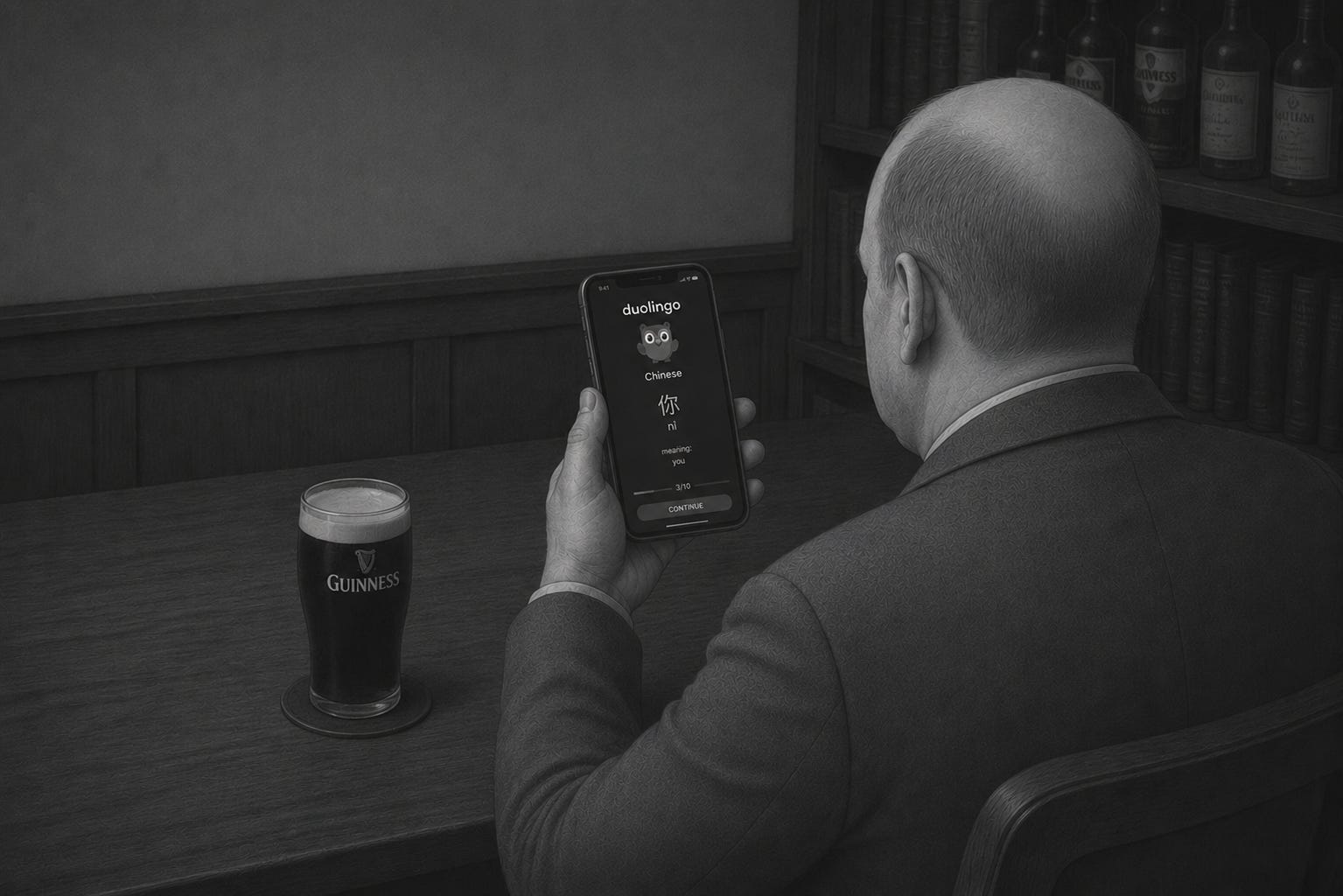
While anyone else in the world shares a briefing note or a discussion summary, diplomats still share an aide-mémoire—an informal summary of a government’s position to clarify without commitment—and an obviously lingering French term from a long passed diplomatic order. Language in the broadest sense is the beating heart of diplomacy. Through it, we can trace the rise and fall of hegemonic powers and their diplomatic orders. So what does it tell us about China’s growing influence?
Diplomatic systems don’t disappear overnight. They linger in phrases, rituals, institutions, and assumptions long after the material foundations beneath them have weakened. Latin survived the collapse of Rome. French remained the language of diplomacy long after Britain became the dominant global maritime and industrial power. Even as American power eclipsed Europe after 1945, much of diplomacy retained French terminology and European etiquette.
This is because diplomatic language is not merely communication. It is hierarchy made visible.
The dominant power of an era shapes not only trade and military systems, but the vocabulary through which international politics is conducted. French diplomacy reflected the aristocratic courts of Europe: elaborate honorifics, ceremonial hierarchy, carefully staged congresses, and indirect phrasing.
Modern diplomatic English reflects something different: managerialism, legalism, technocracy, and the bureaucratic culture of Anglo-American institutions. Today’s diplomacy often resembles corporate administration conducted through acronyms, policy papers, and standardized talking points.
Interregnum periods are where things become interesting.
When one order weakens and another rises, diplomatic language and practice become contested. Rising powers resist the inherited norms of declining powers. Parallel institutions emerge. Existing phrases lose legitimacy. Alternative vocabularies appear. What initially seems semantic or symbolic is often geopolitical.
History offers many examples. Rivals to French dominance increasingly resisted conducting diplomacy solely through French. Newly rising powers demanded translation parity, altered court rituals, or created alternative institutional systems. Such disputes often appeared petty at the time, yet they reflected something profound: declining acceptance of the existing hierarchy.
The obvious question today is whether the world is entering the early stages of a transition toward a more Chinese diplomatic order.
Western observers often dismiss the idea. Mandarin lacks the global penetration of English. Chinese culture does not possess the same universal aspirational appeal as postwar American culture. Beijing inspires caution more than admiration.
Yet hegemonic diplomatic systems are not adopted because populations find them charming. They spread because elites, bureaucracies, corporations, and smaller states conclude that operating within them is advantageous—or unavoidable.
Few nineteenth-century diplomats used French because they loved France. Millions today use English not because they adore America, but because global finance, technology, academia, aviation, and law overwhelmingly operate through English-language systems.
The more important question, therefore, is not whether the world becomes culturally Chinese. It is whether global diplomacy gradually becomes organized around Chinese preferences, assumptions, and sensitivities.
If such a transition is occurring, the early signs will not necessarily be dramatic. Mandarin will not suddenly replace English at the United Nations. Instead, the changes will appear in quieter forms of bureaucratic behaviour.
International organizations could increasingly adopt Chinese-preferred terminology. Corporations may design products and standards first around Chinese market expectations. Universities could prioritize Mandarin capability for strategic rather than cultural reasons. Smaller states could criticize Washington openly while speaking about Beijing with studied ambiguity. Diplomats could increasingly calibrate policy language around anticipated Chinese reactions.
That psychological shift matters enormously.
Hegemony depends not merely on military strength, but on anticipation. During the American-led unipolar era, governments, corporations, universities, and media institutions instinctively framed policy within acceptable American assumptions. Entire industries learned the ideological weather patterns of Washington before explicit pressure was ever applied.
Interregnum periods disrupt this certainty. States hedge. Institutions duplicate systems. Governments speak simultaneously in multiple diplomatic dialects.
One hears the language of “rules-based order” alongside “multipolarity.” Competing vocabularies coexist because the hierarchy itself is no longer fully settled.
Across the Global South, we can see this with terms such as “win-win cooperation,” “South-South cooperation,” “community with a shared future,” “development without interference,” and “mutual respect for sovereignty” increasingly appearing in speeches, communiqués, and diplomatic forums.
These concepts are often adopted not because states are becoming culturally Chinese, but because they reflect the realities and incentives of a changing international order. That is how diplomatic transitions begin: first through concepts and habits, then through institutions and expectations, and only much later through language itself. That may ultimately become the defining feature of this era: not the immediate triumph of a Chinese order, but the gradual erosion of confidence in the universality of the American one.
If you’re a diplomat, is it worth studying Chinese? Sure, probably. Yet, the transition will be slow, uneven, and deeply bureaucratic. English will remain globally dominant for generations due to institutional inertia alone. Yet diplomatic systems are ultimately reflections of power realities. Over time, the world adapts itself to the preferences of whoever possesses the greatest capacity to shape outcomes.
Centuries from now, diplomats may routinely use Chinese, but they’ll still use some lingering English phrase whose original geopolitical meaning has long been forgotten—just as diplomats still exchange aide-mémoires from the vanished world of French diplomatic supremacy.
—
Support, share, comment, and/or subscribe - Buy Me a Coffee!
Though I am not fully aware of Chinese history, I can't conceive or think of a time of the Chinese ever having a hegemonic instinct in thoughts and actions, compared to western Europeans and the like, in their respective histories. Sure, there is a Chinese diaspora. But it is the result of inner Chinese reactions to largely western machination through time. Further, I think they, the Chinese with their newfound power of commerce will wield some global influence in many spheres of human activities, it will be nothing like that of the western Europeans, and their cohorts, over the past time frame. Different natures to say the least.