
Middle power futures beyond the baloney
Middle powers must survive in a world where nobody can permanently guarantee their security, prosperity, or strategic future.

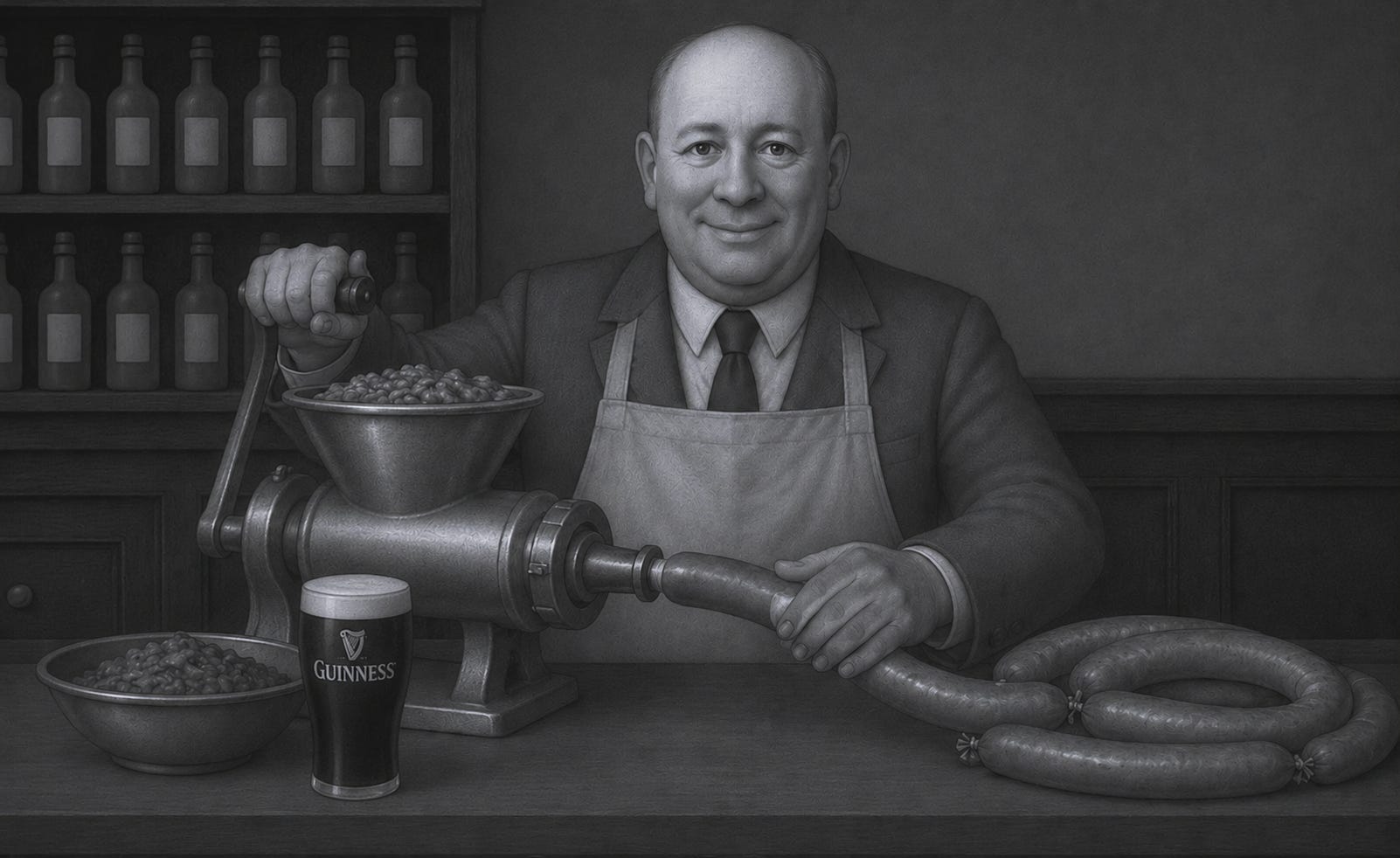
Now I often ramble on about middle powers. That’s because my writing is based upon a life working in the fields of diplomacy and foreign policy with a focus on the Korean Peninsula. I try my best to be creative and innovative when thinking about middle powers because there’s a lot of baloney out there—and nobody needs more middle power baloney.
Middle power baloney is the industrial and uniform, low-quality, filler sausage of liberal-international order scraps and leftovers that comes out in op-eds, think-tank reports, and sometimes academic papers. It’s usually put together by politicians, ex-politicians, and senior (or fresh to the topic) academics, and its prime ingredients are the hopes and dreams that middle powers can join together and restore the liberal international order.
For middle powers, like Australia, Canada, and South Korea, the end of the liberal international order was not simply the decline of American primacy. It was the collapse of a particular historical environment in which they became comfortable, wealthy, and strategically predictable.
These middle powers existed inside a hegemonic structure. The post-Cold War order allowed states such as Australia, Canada, South Korea, and many European states to behave as though geopolitics had been partially suspended. Security was outsourced upward to the United States—one dominant maritime hegemon stabilizing the system.
Trade flowed through relatively open maritime systems. Rules, institutions, and norms were put in place by the hegemon and middle powers spread them throughout the system. This reduced the costs of strategic calculation and middle powers could therefore focus on prosperity, branding, values diplomacy, and niche international roles. Those good times have well ended.
What’s replacing it? Most put it down as multipolarity. Less like a coherent and clean replacement and more a return to what it once was.
Middle powers will once again become exposed to geography, dependence, industrial weakness, demographic decline, energy vulnerability, and military limits.
The first major shift is that middle powers will no longer be able to treat values as the foundation of foreign policy. Values language flourished under U.S. dominance because the strategic environment was already secure. In a fragmented multipolar environment, survival pressures return.
This is why much of the baloney currently smeared across the kitchen table about middle powers working together to restore liberal-international order is just that—baloney.
Middle powers themselves will increasingly speak the language of sovereignty, resilience, economic security, industrial policy, and strategic autonomy rather than liberal values.
The second shift is psychological. During the liberal era, middle powers adopted the worldview of great powers. Their academic institutions, diplomatic language, think tanks, and media ecosystems absorbed American strategic assumptions. They spoke constantly of “global leadership,” “rules-based order,” “deterrence,” and “democratic solidarity,” often forgetting that middle powers fundamentally lack the capacity to independently shape global order.
A multipolar era forces middle powers to think like the middle powers of old.
That means accepting limitation. It means understanding that survival depends less on moral clarity than strategic adaptability. Historically, successful middle powers survived not by mimicking great powers, but by carefully balancing relationships, avoiding unnecessary ideological rigidity, diversifying economic exposure, and maintaining maneuverability between stronger states.
For states geographically adjacent to major powers it meant maximum adaptability. For South Korea, the fantasy of existing purely inside a maritime liberal order was always somewhat artificial. Geography never disappeared. China remained next door. Russia remained nearby. Japan remained historically central. The liberal-international order and the U.S. alliance temporarily suppressed these realities, but did not eliminate them.
In a multipolar era, middle powers will likely divide into several broad categories.
Some will become hardened bloc states, integrating tightly into either American, Chinese, or even Russian systems in exchange for security and economic guarantees. Others will attempt strategic balancing, maintaining deep relations with multiple centers of power simultaneously. Others still may drift into partial neutrality or highly transactional diplomacy.
The key point is that middle powers will vary widely, but most will increasingly prioritize flexibility over ideological purity.
Diplomatically, institutions will likely become less important. Middle powers will still participate in forums and summits, but the real question becomes: who controls supply chains, semiconductors, shipping routes, industrial inputs, rare earths, AI infrastructure, food security, and capital flows.
Military strategy also changes. Under American primacy, many middle powers could afford relatively small militaries because ultimate escalation dominance rested with Washington. In a fragmented order, middle powers will need to increasingly pursue independent and asymmetric deterrent capabilities, short and long-range strike systems, mobility, cyber capacity, drones, and in some cases even latent or explicit nuclear options.
Most importantly, middle powers will increasingly rediscover that international order is not permanent. The liberal international order encouraged the belief that history had stabilized into rules, institutions, and managed competition. There were of course those who believed that it would not end. Multipolarity reminds middle powers that order is historically contingent and temporary.
For middle powers, then, the coming world is not fundamentally about choosing between Washington and Beijing. It is about relearning how to survive in a world where nobody can permanently guarantee their security, prosperity, or strategic future. How to do this is the debate that needs to replace the baloney of restoring the liberal-international order.
—
Because of poor pay, academics sneak into think-tank conferences to steal muffins and pastries. Watch their pockets as they leave. Buy Me a Coffee!