
Some middle power commentaries make me puke
Middle powers cannot build a new international order, cannot sustain an old one, and cannot save the world.

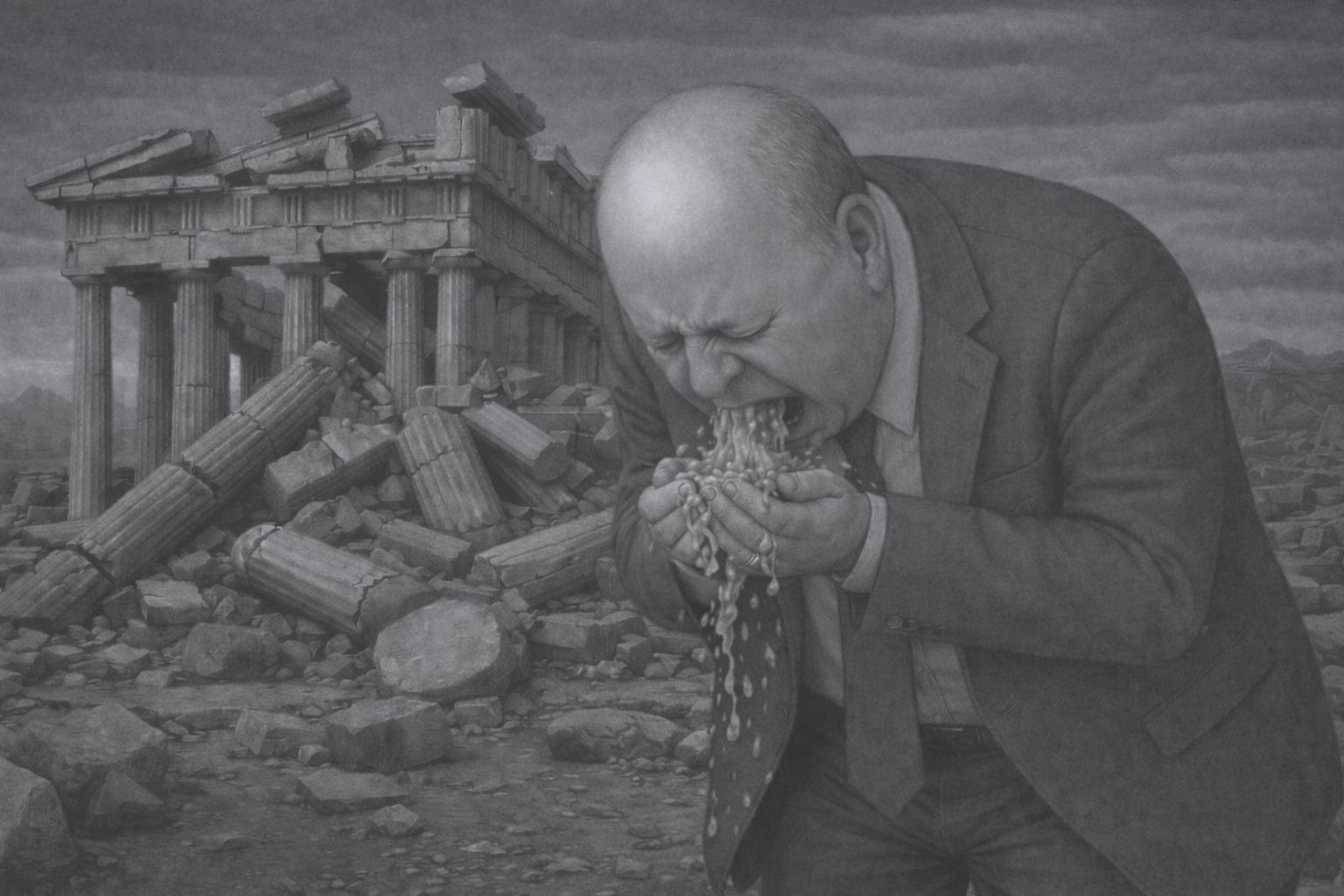
In recent months, former politicians, senior scholars, eager-to-please next-generation think-tankers, and fly-by-night pundits have taken to the commentary and policy circuit to suggest that countries like Canada, Australia, and South Korea can “step in” and stabilize the fraying U.S.-led order. They make me wanna puke.
Let’s make it clear: Middle powers cannot build a new international order, cannot sustain an old one, and cannot save the world.
Middle powers did not build the postwar system. They operated within it. Their influence, prosperity, and diplomatic reach were contingent on a deeper structural condition: the presence of a dominant power willing and able to underwrite security, absorb costs, and enforce rules - that aligned with those states. The United States was not simply first among equals. It was the system manager.
If international order were a temple, the United States was the pillars that kept up the roof. Those pillars are gone. The United States is not simply retrenching materially; it is retreating from the very norms it constructed and enforced. From selective adherence to trade rules, to the instrumental use of sanctions, a transactional approach to alliances, and illegal wars. Washington now treats the order as if it didn’t exist. The middle powers cannot hold up the weight of the temple roof.
And yet, as the roof crashes down upon the pews, former politicians, senior scholars, eager-to-please next-generation think-tankers, and fly-by-night pundits continue to project an almost romantic vision of middle power agency. With their hopeful op-eds, it’s like they’re trying to hang chandeliers in the temple as it crumbles around them.
Canada and the inspirational Carney will lead, Australia will coordinate, South Korea will mediate. Collectively, they will sustain the system. The heck they will!
Middle powers are, by definition, constrained. Their military capabilities are limited. Their economic weight, while significant, is insufficient to anchor global stability. Their diplomatic reach depends on institutions that require enforcement. Most critically, they lack the capacity to absorb systemic shocks—financial crises, regional wars, or great power confrontations—without external backing.
Middle powers are not substitutes for a great power. They cannot build a new international order and they cannot sustain an old one.
Take security. Australia’s strategic position remains fundamentally dependent on extended deterrence and U.S. power projection. South Korea’s entire defense posture is built around the U.S. alliance. Canada’s role in global security has long been mediated through NATO and U.S.-led operations. None of these states can independently deter major adversaries, let alone manage escalation in a great power conflict.
Or consider economics. The open trading system that enabled middle power prosperity was underwritten by U.S. market access, financial stability, and naval dominance. Fragmentation of that system—through protectionism, sanctions, and geopolitical competition—cannot be offset by middle power coordination. When the U.S. itself breaks the rules and norms of that trading system, middle powers adapt.
Lastly, think diplomacy. Through budget cuts and misdirected investment in national security rather than diplomacy, and an ever increasing preference for political appointments rather than departmental appointments, both Australia and Canada have weakened their diplomatic capacity. South Korea stands out as the sole middle power still investing in diplomacy.
What we are seeing, then, is not the rise of middle powers as system managers, but their exposure. The conditions that allowed them to act with confidence are disappearing. In their place is a more contested, less predictable environment in which their room for maneuver is narrowing, not expanding.
Some commentaries spin on about past grand schemes, like APEC, the Cairns Group, or R2P and dream about their revival. When I read them I can help but imagine a colonial Kitchener type rallying call: “We did it once, we can do it again, rah rah!” Sure, it’s hard for former politicians to let go, but really, does this serve any purpose? APEC was formed in 1989 and it was a great initiative. Talking about it now is the same as people in 1989 talking about the San Francisco Peace Treaty - that is, talking about an initiative that established an order, at the end of an order.
Others have gone so far as to suggest that some of the paler post-2000 middle power initiatives demonstrate the capacity to step up - like MIKTA. Mexico, Indonesia, Korea, Turkey, Australia (MIKTA) was a pointless endeavor that marked the fecklessness and misdirection of the concept. Diplomats today know that they’re on the way out when they’re assigned to work on it. It’s like an IR academic being asked to teach academic writing - it’s just a matter of time before your office is shared with three PhD students, broken chairs, and a sink for the cleaner’s mops.
None of this is to suggest that middle powers are irrelevant. They matter. They can shape regional outcomes, build coalitions, and influence specific issue areas. But they do so within constraints. They do not define the system.
The more honest conversation is not about how middle powers can preserve the existing order. It is about how they will adapt to its transformation.
That means asking questions about how middle powers will fare in a multipolar international order in which China holds the greatest influence. Some middle powers in Southeast Asia have been adapting to this for some time. Some middle powers across other regions, such as Iran, have adapted so readily that their power has been greatly enhanced - to the point that some question whether they are a great power.
The danger of the current discourse is that it delays this reckoning. Insisting that middle powers can compensate for the U.S. encourages policies that assume continuity where there is rupture. It prioritizes reassurance over realism.
The era in which middle powers could rely on U.S. leadership has ended. The temple has collapsed. There ain’t no point hanging those chandeliers anymore.
Middle powers cannot save the world - and many will struggle to adapt to the emerging multipolar order.
This little piece won’t stop former politicians, senior scholars, eager-to-please next-generation think-tankers, and fly-by-night pundits from spinning s&%t about the promise of middle powers. Most publishers of such commentaries are invested in the concept and/or the names of those who push it.
All that I can do is leave a stern warning: if you’re in public, carry a vomit bag the next time you read about how middle powers will save the world.