
The shift in international relations scholarship
Twenty years ago, the idea that Korean scholars might seriously weigh Beijing or Shanghai alongside Washington or Boston as centers of academic prestige sounded improbable.

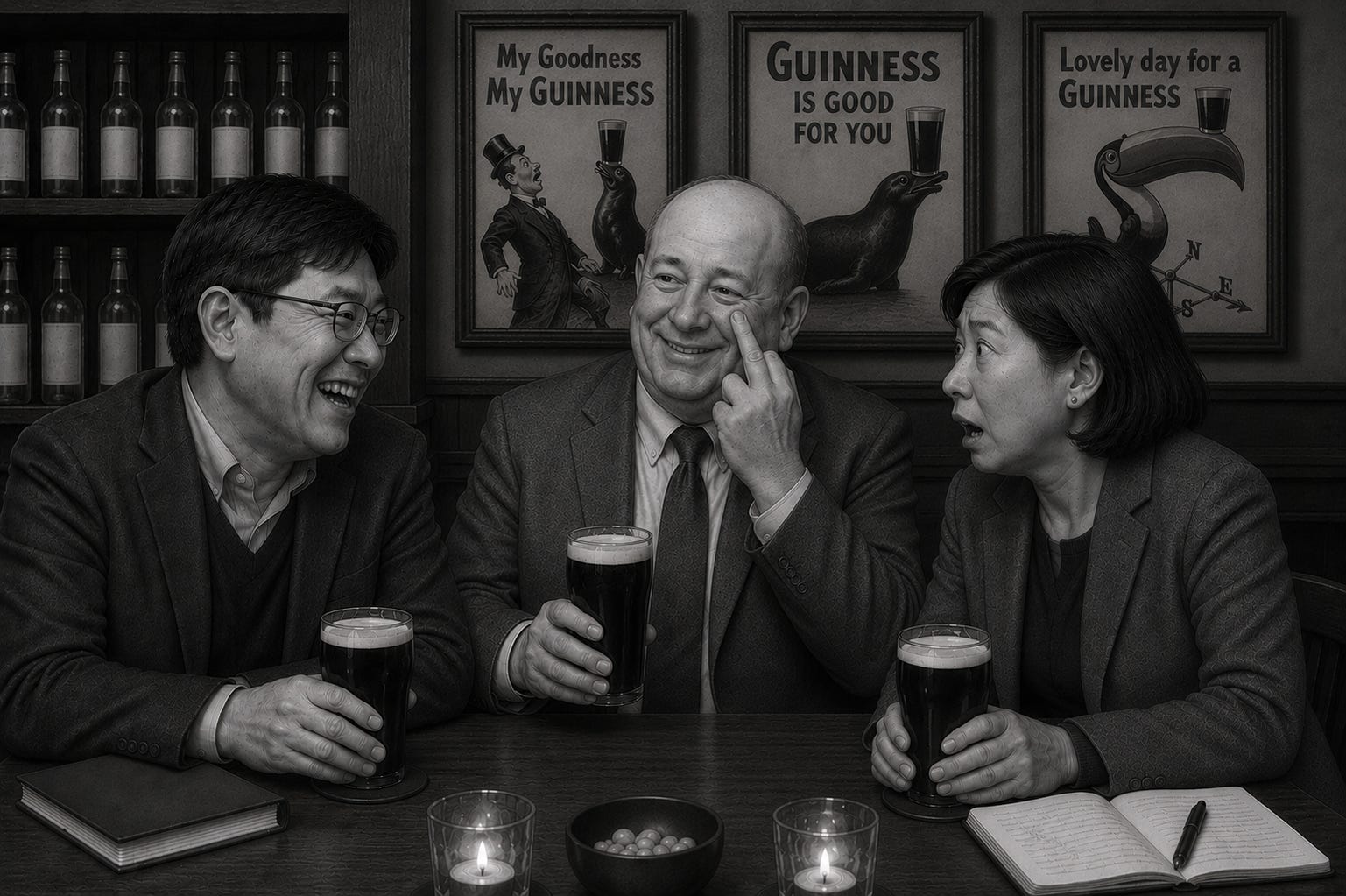
Three international relations (IR) scholars go into a bar. One works in China, one in America, and one in South Korea. Although it sounds like the start of a bad joke, it was a serious night with each of us discovering that the field of international relations (IR) has changed - and it’s a lot easier to see it from Seoul than from Washington.
Like any gathering of academics we first complained about the imaginary heavy burdens that we face and how administration is ruining our lives. We then discussed what we’re researching and what funding opportunities we were pursuing.
A few drinks in, and we started to turn a corner. After a few more, we sped down the straight to reach a broad agreement on three issues: First, the opportunities available in the United States are decreasing; second, the opportunities in China are increasing; and third, the very field and how its institutionalized, is rapidly changing. Let’s explore these in more detail.
From South Korea the centrality of America to international relations has always been overwhelming. Look at the make up of the faculty at any university, and the vast majority of professors completed their postgraduate studies and often started their careers in the U.S. Until a decade or two ago, it was weird to even find somebody with a degree from outside the U.S.
For generations of Korean scholars, intellectual advancement meant moving through the U.S. system—studying, working, taking sabbaticals or pursuing visiting fellowships in Washington, Boston, New York, California, or the Midwest, before returning home carrying with them the assumptions, frameworks, and professional habits of the American academy.
Part of this was economic. Opportunities to advance were in the United States. The major grants, the highest-ranked journals, the most influential conferences, and the strongest institutional networks were concentrated there. A publication accepted in an American journal carried disproportionate prestige. A fellowship at an American university could transform a career. Hiring committees across Asia treated American credentials as shorthand for quality and legitimacy.
The United States was not simply one academic center among many; for much of the post-Cold War era, it functioned as the gravitational core around which the discipline revolved. Over the last decade, this changed.
Tenure-track positions shrank, universities faced financial and freedom of speech pressures, and younger scholars increasingly saw precarious employment rather than stable careers.
Even worse, and felt sorely in Seoul, international scholars faced growing uncertainty surrounding visas, political tensions, and institutional hostility. Even attending conferences started to become stressful when entry into the country itself felt unpredictable.
At the same time, China has changed. Chinese universities now offer generous funding packages, large research institutes, international partnerships, housing support, and ambitious recruitment drives.
For Korean scholars in particular, the attraction is obvious. China is geographically close, financially ambitious, and increasingly central to the very regional order many Asian scholars now study over their seniors’ preferences for U.S. security and alliances.
China is today rapidly producing clusters of globally competitive universities across engineering, science, technology, and increasingly social sciences. Peking University, Tsinghua University, Fudan University, and Renmin University of China have globally competitive international relations programs with enormous funding, expanding research institutes, and aggressive international recruitment.
Twenty years ago, the idea that Korean scholars might seriously weigh Beijing or Shanghai alongside Washington or Boston as centers of academic prestige would have sounded improbable. Today, it increasingly feels like part of a broader structural shift in the geography of global intellectual life.
This in turn is transforming the institutional setting of the field. For decades, the United States sat unquestionably at the center of the IR discipline. If you wanted a serious academic career in international relations, you went through American universities, American conferences, American publishers, and American networks.
The most telling demonstration of this was the International Studies Association (ISA) Annual Convention. The ISA Annual Convention was not just another conference; it was effectively the central marketplace of the profession. You built networks there, you undertook job interviews there, you met publishers there. The ISA Annual Convention was the unquestionable institutional heart of the discipline—and it was always in America (except for the once in a decade Canadian locale). Now that centrality has become less certain.
An “international” association depends on international mobility. If scholars from the rest of the world begin finding it difficult, expensive, politically risky, or administratively exhausting to enter the U.S., pressure will inevitably grow to diversify conference locations - and the U.S. restrictions on academic mobility and freedom of speech now restrict the capacity of scholars to participate in ISA Annual Conventions.
It used to be that questions about censorship, surveillance, academic freedom, and political pressure would dominate the discussion about conferences in China. Now they do just as much in the U.S.
Have you criticized Donald Trump in your social media? Have you criticized U.S. policy in your media commentary? Are you from the global South? Are you from one of the ever-increasing number of countries under U.S. sanctions? You’re probably not going to an ISA Annual Convention until it’s next held in Canada.
Are you South Korean and want to go to the U.S. for an ISA Annual Convention? Show your social media accounts, your passwords, your email, your financial statements, your evidence of employment, submit it all at least three months in advance, attend an interview at the embassy, and make sure that you’ve never criticized Donald Trump.
Want to go to China for an alternative conference? You don’t need a visa, buy a ticket that’s considerably cheaper, use the infrastructure that actually works, and forget about those fears of getting mugged or shot. Already, more and more South Korean academics are limiting themselves to regional ISA conferences.
Sooner or later, the ISA will need to move permanently to Canada, South Korea or even China, or an alternative and rival body will be set up. Just as manufacturing, finance, technology, and research networks gradually shifted toward China over the last two decades, the institutional center of gravity in international studies may eventually shift there as well.
So what began as a setup for a bad joke ended up revealing something serious about the changing structure of the international relations discipline. It’s hard to ignore that the trend in IR is much the same as in every other field. the center is moving. It’s still hard for Americans to see, and it’s still easy to refute, but from South Korea, it certainly no longer sounds like a joke.
—
Academics gain more confidence with coffee - Buy Me a Coffee!
Self-interest and or converging interest are keys to life in all of its aspects at this point in time, especially.