
The United States has finally nominated a new ambassador to South Korea
An ambassador embodies attention. Their presence indicates priority. Their absence—especially when prolonged—suggests something else.

The United States has finally nominated a new ambassador to South Korea: Michelle Steel. Her appointment comes not at the start of a new administration, but 15 months into it—a delay that has already shaped the diplomatic environment she is about to enter.
By the time she arrives, the real story will not be who she is, but how long it took.
The absence of an American ambassador in Seoul is no longer an anomaly. It’s a pattern - and to many people on the ground, it also kind of feels like a slight.
The United States has routinely left its ambassadorial post vacant for extended periods—often around a year, sometimes longer. In this case, the gap stretched to well over a year, leaving the alliance without a Senate-confirmed envoy through a period of significant strategic friction.
During that time, acting officials filled the role. Policy coordination continued. But the absence was not neutral.
This time round, the gap coincided with stalled discussions on key issues—tariffs, trade, and investment, wartime operational control, nuclear submarines and shipping, and oh yeah... a f@cked up war disrupting the global economy. The first time Trump was in the White House, it coincided with “fire-n-fury” as Trump tweeted the peninsula towards confrontation. That was fun too.
Supporters can argue that the American process is deliberate by design. Ambassadors are nominated by the president and must go through Senate confirmation. This can result in real strengths. It can ensure scrutiny, accountability, and democratic legitimacy.
Nominees are questioned, vetted, and publicly evaluated. Because diplomacy is not left entirely to executive discretion, the ambassador holds a degree of political weight. They carry authority and institutional backing, representing not just the administration, but through the confirmation process, the American people. That’s how it’s meant to be.
Under Biden and Trump, the process aged like cheap plonk in a plastic bottle on a hot summer’s day. Oversight turned into formality but remained slow and politically clogged. It no longer kept pace with modern diplomacy. This time round, it took over a year for a nomination to even reach the Senate.
Meanwhile, across town, the Chinese embassy operates differently. Ambassadorial transitions are typically rapid. The chair is rarely empty for long.
The Chinese model ensures continuity without observable political friction. The Ministry of Foreign Affairs identifies and promotes candidates from the professional ranks of career diplomats who are then appointed through internal party-state processes.
It’s a streamlined process, and ensures continuity and speed. Rarely if ever, is there a vacuum. Diplomatic engagement proceeds without interruption and strategically important posts are never left unfilled. It produces greater consistency in messaging, with less room for personal proclivities and political swings.
Two systems. Two tempos. Two very different approaches to diplomacy. It’s almost like we’re comparing Chinese and American trains, airports or highways. One is new and works well, the other is old and worn out. The end result—China is almost always represented at ambassador level. The United States is not.
It’s easy to dismiss this as trite but when you narrow down to the street level, there’s a real difference. I can see it as a professor. Over the last year, how many university students did a Chinese ambassador engage with in Seoul? And over that same period, how many did an American ambassador engage with? A conservative estimate might put it at something like 500 to none. Probably more.
It seems somebody in Washington needs to rewrite or at least read, Willian J. Lederer and Eugene Burdick’s 1958 classic, The Ugly American. What that book warned about—amateurism, arrogance, and bureaucratic decay—now reads less like critique and more like description.
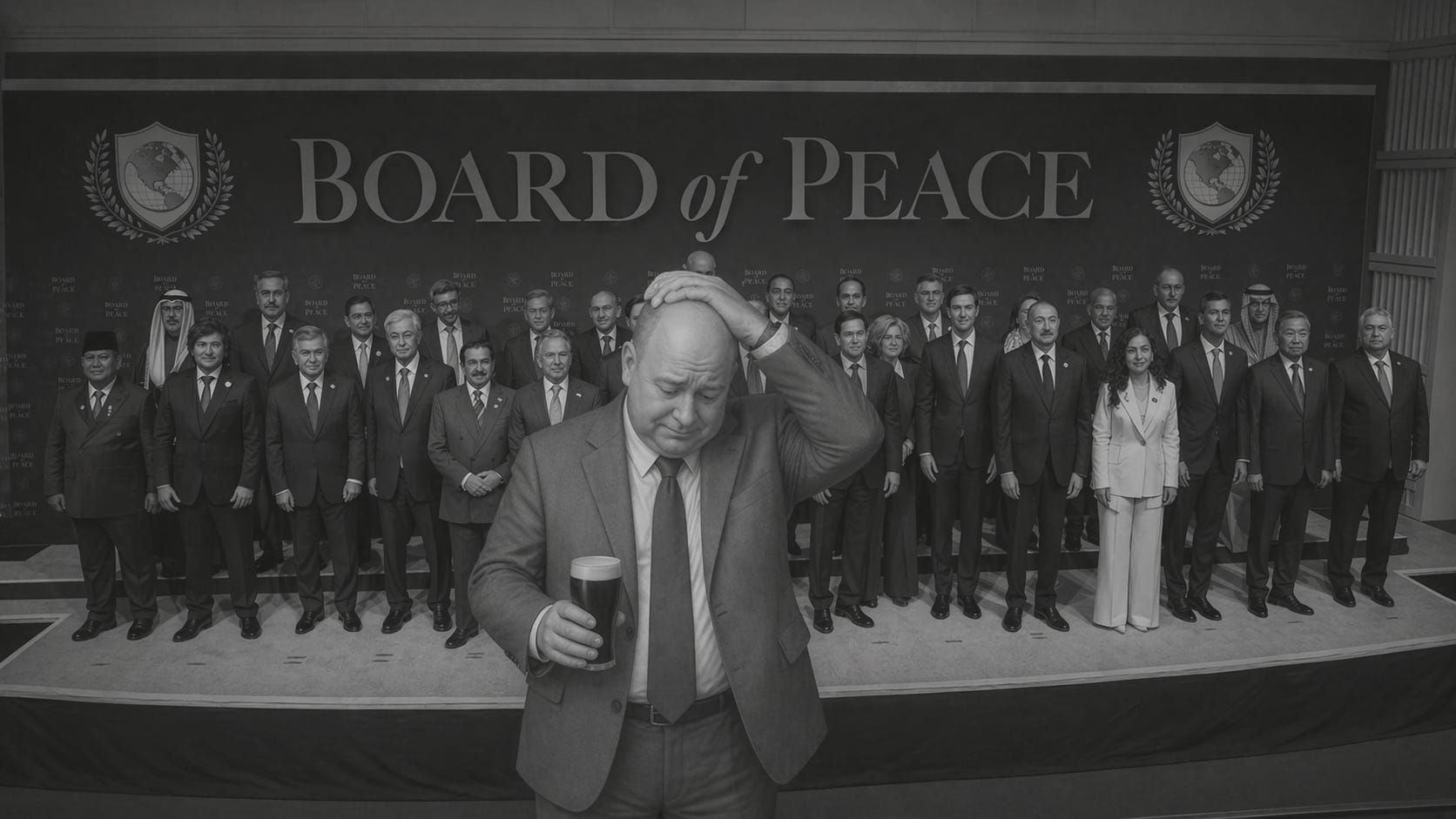
Think about Iran and Ukraine and the problem is clearly not just about delay alone. It is decay. The United States has not just slowed its diplomacy; its hollowed it out. Now I dare you to think about the Board of Peace (or is it Bored of Peace?).
The depth of the depravity in American diplomacy can be found in the logo alone. WTF were they thinking? It’s from a 1990s computer game—not the expensive one that that rich kid down the street had, but the cheap one your grandpa bought because it sounded the same. Then there’s “President Donald J. Trump’s Comprehensive Plan to End the Gaza Conflict”. On seeing that is probably the point at which the most diplomats ever decided to leave the State Department.
The State Department, once a professional corps with institutional memory and regional fluency, has been allowed to atrophy—underfunded, sidelined, and increasingly treated as an afterthought in the conduct of foreign policy.
Into that vacuum has crept a different type of operator. Not the patient diplomat, but the opportunist. Political appointees with thin experience. Donors and dealmakers. Polymarket anyone? The occasional grifter dressed up as a strategist, more comfortable talking markets and narratives than languages and alliances. It is not that every appointment fits this mold—but enough do to change the character of the system.
Michelle Steel may prove to be an excellent ambassador. All indications are that she will be. But when ambassadors arrive late, stay briefly, and operate within a system that no longer prioritizes the slow work of relationship-building, they’re not off to a great start. In a place like Seoul—where diplomacy is not abstract but lived, and negotiated daily across institutions, universities, and ministries—that absence is not just noticed. It is felt.
An ambassador embodies attention. Their presence indicates priority. Their absence—especially when prolonged—suggests something else.
https://www.koreatimes.co.kr/opinion/blogs/imbricatedchaos/20180512/from-the-prison-cells-of-guantanamo-bay-to-embassy-in-seoul
https://www.koreatimes.co.kr/opinion/blogs/imbricatedchaos/20180205/cracking-the-cha-mystery