
Washington think-tanks, Trump, and Korea
To hear Trump’s 42nd deal to end the Iran war on the eve of a White House cage fight and conclude that Korea needs Trump's attention is some f%^&%d up magic mushroom s%^t.

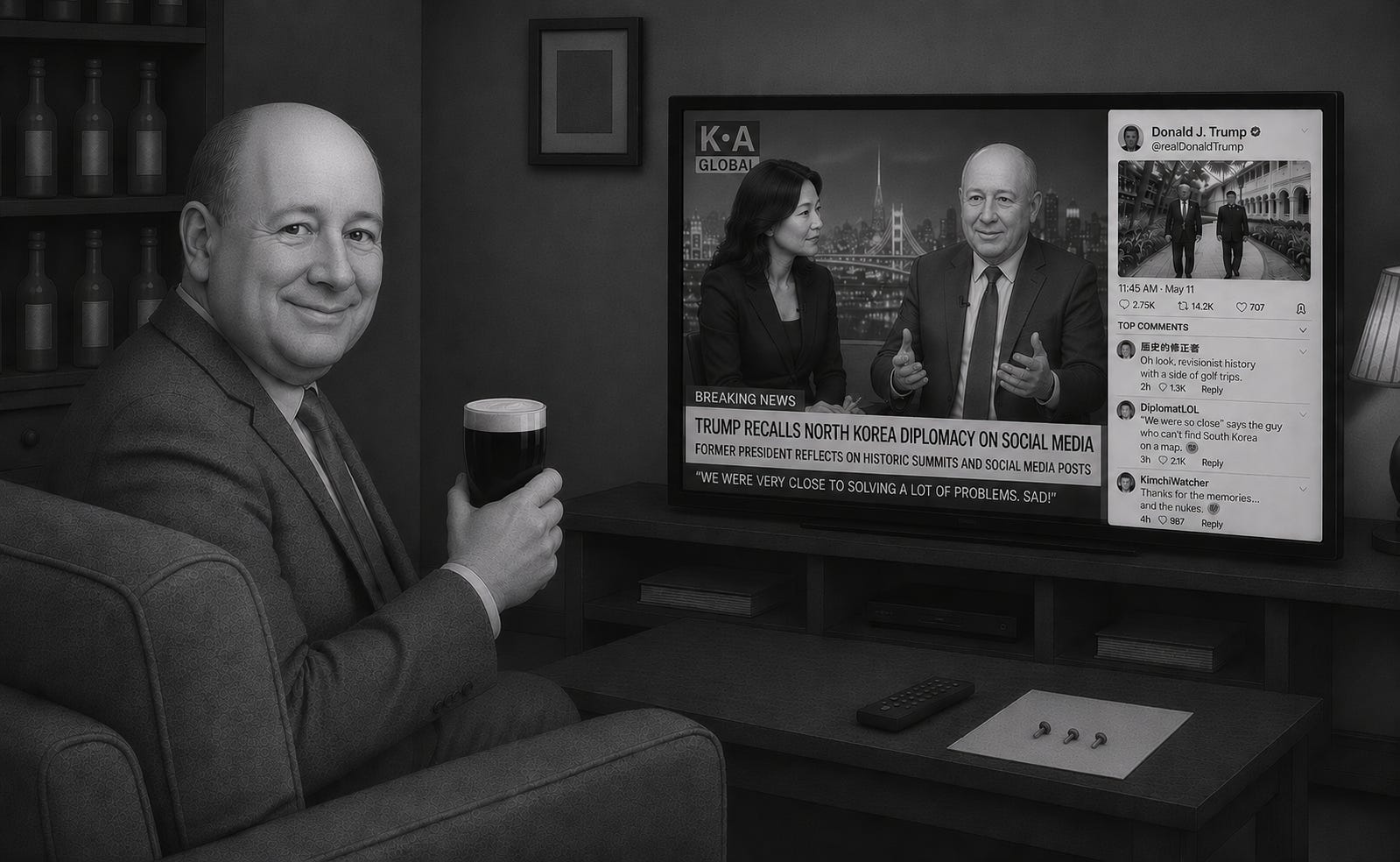
We’ve all read them. The policy briefs explaining how Donald Trump should approach Kim Jong-un, how summit diplomacy could be structured, what concessions should be offered, and what outcomes should be pursued. More are suredly being drafted as you read this, and the smooth think-tank media monkeys and the social media algorithms will ensure we’re all exposed to them.
Think-tanks survive not by giving good advice, but by demonstrating influence. Influence requires visibility. Visibility requires participation in every major policy debate, whether or not the participants have any realistic prospect of affecting the outcome. There is something deeply absurd about this—think-tank Korea experts are offering advice to a man who has spent his political career ridiculing expertise, dismissing professional knowledge, and ignoring advice he does not like. Let’s think that through for a few minutes.
First, Trump doesn’t read. This is not a controversial. Throughout his political career, Trump has openly ridiculed expertise, dismissed specialist knowledge, and shown little patience for lengthy policy analysis. We’re not even sure ANY advice gets to him cos he surrounds himself with loyalists whose primary qualification is personal loyalty rather than technical competence. Traditional policy processes don’t interest him.
This creates a perverse incentive. If think-tanks want influence, they must find ways to speak to an audience that does not value expertise. Over time, they begin adjusting themselves accordingly. Analysis becomes rationalization. Rationalization becomes accommodation. Accommodation eventually becomes promotion.
The result is that organizations ostensibly dedicated to providing independent expertise find themselves explaining, defending, and ultimately legitimizing the actions of an administration that has little interest in expertise itself. The closer analysts attempt to get to power, the greater the temptation to tell power what it wants to hear.
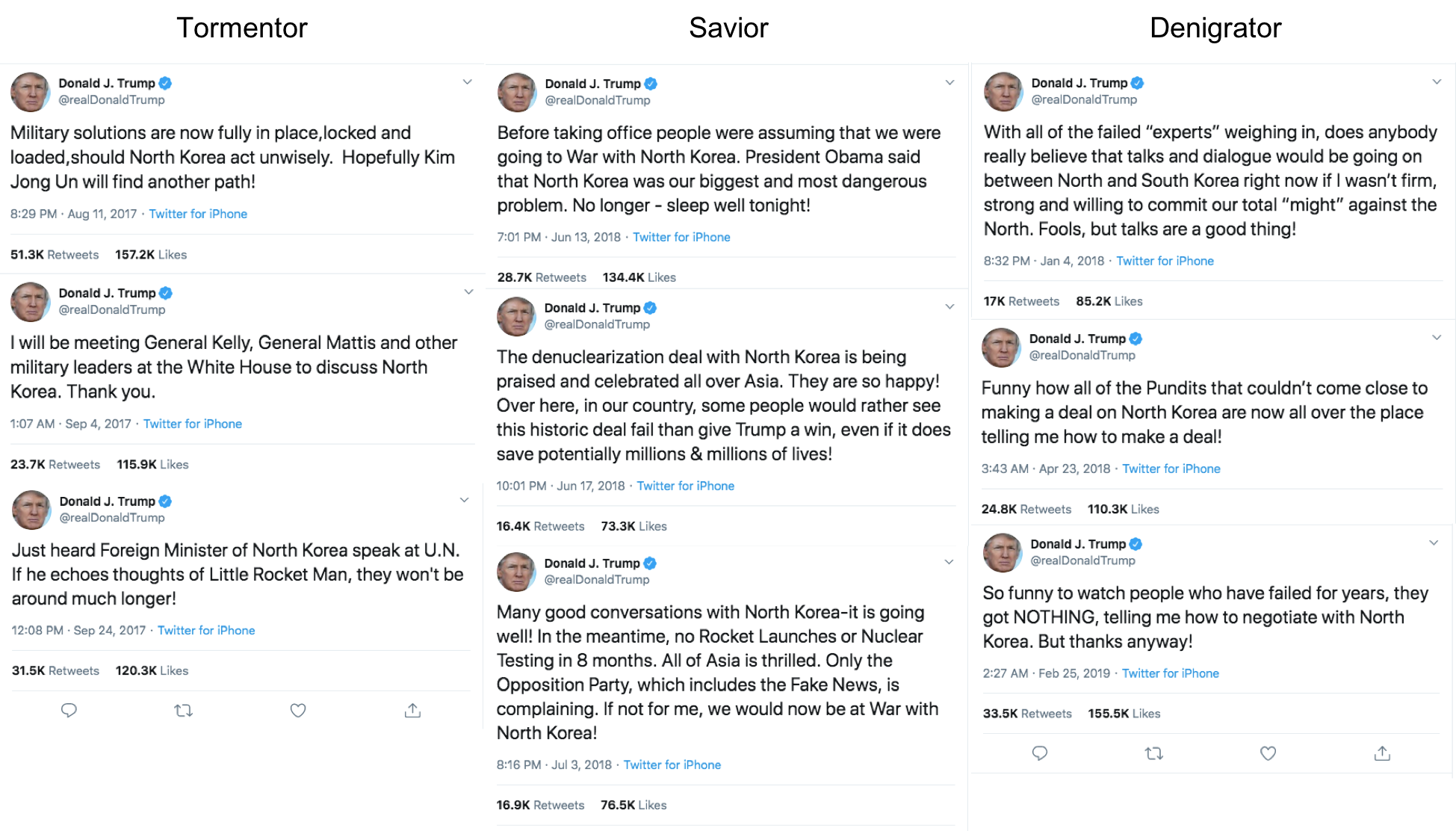
Second, Trump’s diplomatic record gives absolutely no reason for optimism. Unconventional leadership can produce breakthroughs. Incompetent leadership does not. The summits with North Korea generated headlines but no lasting settlement. It was a pattern of disruption without durable outcomes. The belief that another Trump initiative toward North Korea would somehow succeed where previous efforts failed requires a level of faith unsupported by evidence. Recent events elsewhere make it even scarier. Trump’s Iran debacle is a monumental f%$k up.
To hear Trump’s 42nd deal to end the Iran war on the eve of a White House cage fight and conclude that Korea needs Trump’s attention is some f%^&%d up magic mushroom s%^t. It really requires a solid rethink.
Whatever one thinks of North Korea policy, there’s no reason to believe that impulsive, personality-driven diplomacy offers a path toward stability on the Korean Peninsula. Those who genuinely care about Korea should be cautious about encouraging not only another round of summit-driven spectacle but also the risks of an almost certainly senile senior with increasingly unpredictable behavior.
Third, renewed Trump engagement would likely accelerate long-term doubts about the alliance rather than strengthen it. The most significant development on the Korean Peninsula today is not North Korea. It is the growing debate over the future of South Korea’s relationship with the United States.
For decades, alliance managers could assume a broad consensus regarding American leadership. That consensus has ended. Questions about reliability, strategic priorities, burden sharing, and long-term commitment are now openly discussed even amidst conservatives. The uncertainty does not originate in Seoul. It originates in Washington.
Every episode of political turbulence in the United States reinforces a simple question: should South Korea permanently tie its future to a partner that appears increasingly unpredictable? Trump is at the center of this question. His transactional approach, his hostility toward traditional diplomatic practice, and his tendency to personalize statecraft all deepen concerns about American reliability.
More than anything else—it is his absolute incapacity to achieve outcomes, whether its tariffs, bilateral relations, alliances, war negotiations, or war itself—he has failed. If he turns to Korea, he will also fail there. Another Trump failure would be disastrous for the Korean Peninsula.
We really don’t need another think-tank brief on how Trump should approach Kim Jong-un. My advice for CSIS, Brookings, and friends? Write a brief detailing the end of the alliance because that’s the only outcome Trump has assured.
—
Support my writing, please! - Buy Me a Coffee!