
What’s Washington’s position?
For the first time since the Korea - U.S. alliance was signed, the answer to that simple question “what’s Washington’s position?” is unusually fluid.

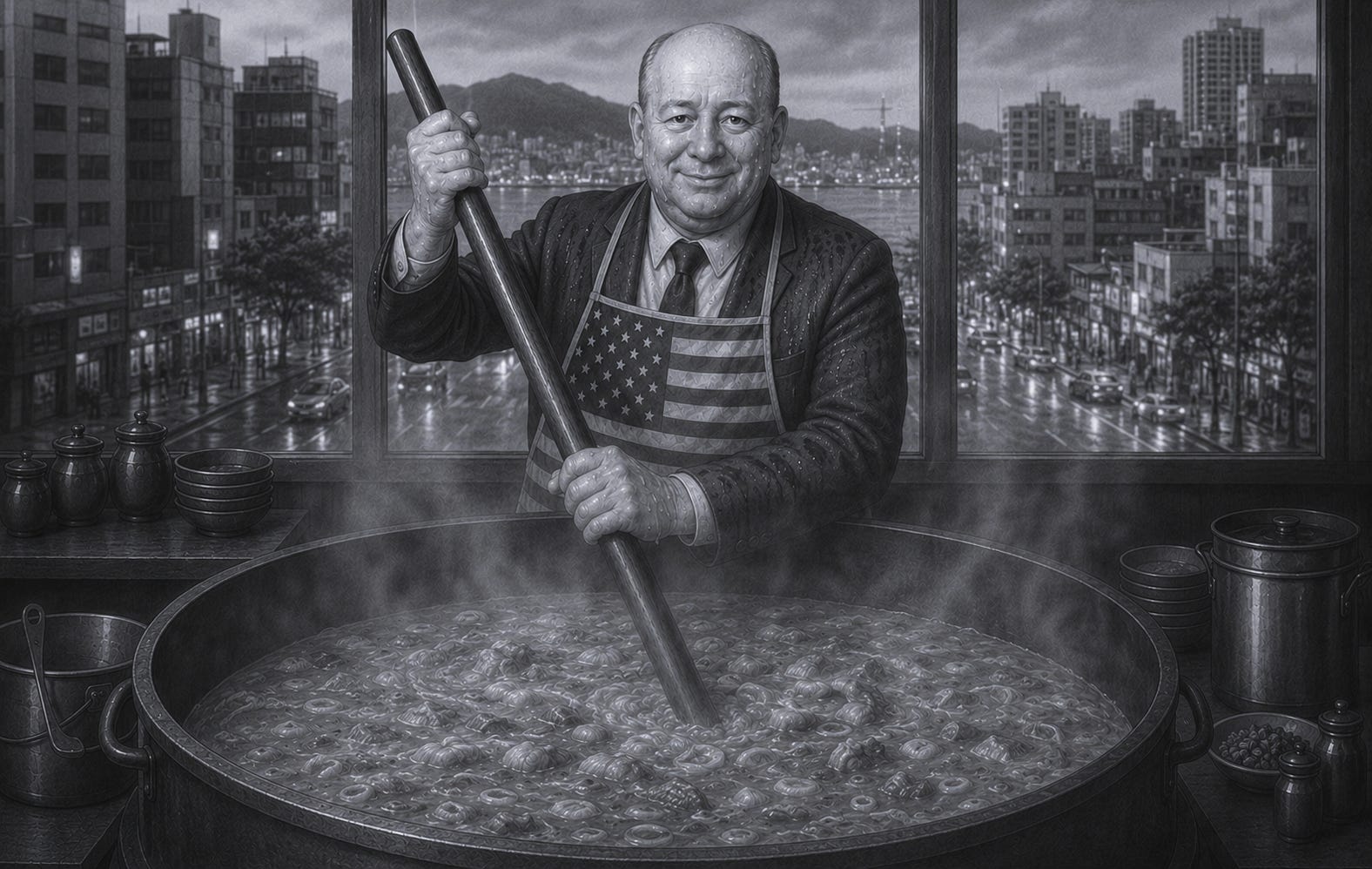
“What’s Washington’s position?” For as long as this old man can remember, strategic debates in Seoul have ended with that one question. Nuclear weapons, operational control, missile ranges, naval expansion, relations with China, intelligence sharing—all carefully brewed and then capped with a single question.
For the first time since the alliance was signed, the answer to that simple question “what’s Washington’s position?” is unusually fluid. This means that now is the easiest moment in the history of the alliance for South Korea to pursue bold strategic change.
Paradoxically, this is not because the international environment is stable. Quite the opposite. The regional order is arguably more dangerous by the year. China is more influential and more assertive. North Korea is a confident nuclear state with strong links to its great power neighbors. Russia has returned as a strategic actor in North Asia. Confidence in the utility of being a U.S. alliance partner has weakened across the Indo-Pacific.
Yet, one factor makes bold strategic change not only possible, but potentially even probable if imposed from outside—that factor is none other than the peculiar character of the perfume selling, mobile phone swindling, commemorative coin and crypto-currency conning, sneaker-selling president and commander-in-chief, Donald Trump.
Trump is not a traditional alliance manager. He does not think in the language of postwar Atlanticism, liberal institutionalism, or shared democratic values. He thinks transactionally, personally, financially, and egoistically. He admires flattery, visible burden-sharing, large purchases, investment announcements, and leaders willing to publicly praise him. He has repeatedly demonstrated a willingness to overturn decades of strategic orthodoxy if he believes it benefits him politically or personally.
That creates an unusual opening for South Korea regardless of which strategic direction it ultimately chooses. Even the wildest options heard while stuffing your pockets with muffins at think-tank conferences, or debated over late night drinks are now open.
If Seoul wanted to pursue an independent nuclear deterrent, the current environment is the least resistant it will ever be. The old American foreign policy establishment that once treated proliferation as an almost theological taboo has fractured. Large sections of the U.S. strategic community now openly discuss allied nuclearization as a burden-sharing mechanism. Trump himself has repeatedly questioned why wealthy allies rely on American protection while contributing insufficiently to their own defense.
A South Korean leadership willing to frame nuclearization not as anti-Americanism, but as relieving the United States of strategic burdens, and even contributing a “thorn in the side” to strategic rivals in much the same way that North Korea sits to the U.S. might find a far more permissive environment than once assumed.
If Seoul wanted to pursue strategic autonomy short of nuclear weapons, conditions are unusually favorable. Seoul is already moving in this direction. Operational control transfer continues to advance. Indigenous missile and aerospace capabilities are growing rapidly. South Korea’s defense industrial base is now globally competitive, exporting tanks, artillery, missiles, and aircraft across Europe and the Middle East. The quiet pursuit of nuclear submarine capabilities reflects a country increasingly unwilling to remain strategically dependent forever. This could easily be accelerated under Trump.
If Seoul instead concluded that the best option is not autonomy but deeper alliance integration, this too may never again be so achievable. Trump’s worldview rewards visible loyalty. A South Korea willing to dramatically increase host-nation support, purchase additional American weapons systems, expand basing access, or publicly align itself with Washington’s China strategy could likely secure extraordinary concessions in return.
Finally, if Seoul, for whatever reason, decided that loosening or even ending the U.S. alliance was the best option, that too may be easier now than at any previous point in the postwar era.
For decades, the alliance was reinforced not only through troops and treaties, but through dense intelligence relationships and informal influence networks that helped keep South Korean political discourse within broadly acceptable boundaries from Washington’s perspective. American-linked security institutions, policy communities, media networks, and intelligence coordination mechanisms all helped shape what was considered strategically “reasonable” in Seoul.
Similarly, the dense human networks: fellowships, exchange programs, think tank funding, visiting scholar programs, military education exchanges, congressional staff visits, young leaders initiatives, university partnerships, and endless people-to-people programs, all cultivated generations of South Korean academics, journalists, bureaucrats, military officers, and politicians who hold the alliance not only as natural but as part of their person.
If Seoul decided that loosening or even ending the U.S. alliance was the best option, Trump’s personalized and transactional style of governance would weaken or disrupt this architecture of intelligence relationships and informal influence networks faster than Big Mac Value Meals are served in Mar-a-Lago.
There lies the irony of the present moment: virtually every strategic pathway is more open than it once was. Twenty years ago, many of these moves would have triggered sharp American resistance. Today, Washington is distracted, internally divided, and openly corruptible.
It’s likely future American administrations will be staffed once again by traditional alliance managers, non-proliferation absolutists, and institutional strategists. The bipartisan American establishment may eventually reassert itself and once again seek to tightly manage allied behavior.
That is why timing matters. There are rare moments in international politics when systems loosen, hierarchies soften, and previously impossible options become negotiable.
The deeper question is therefore not whether South Korea should pursue nuclear weapons, alliance autonomy, or deeper integration with the United States. Reasonable arguments exist for all three. The more important question is whether Seoul recognizes that the time and space for bold strategic moves is very limited.
For South Korea, for better or for worse, that time is now. Failing to act, may end in future strategic questions in Seoul ending with one question “what’s Washington’s position?”, or another “what’s Beijing’s position?”
—
Academics wear tweeds because they can’t afford laundromats - Buy Me a Coffee!
It's about time,the US is now structually weak,culturally dead,industrially stagnent and declining,with petrodollar on the verge of acclerating decline,the Western Empires has not been this weak for centuries,it's probable the West as a whole will be in turmoil for two hundred years before finally giving up like the Romans.
It's in Korea's best interest to not align with the US and also to not provoke China,Korean economy relies too much on the current arrangement to not be exposed to radical change.
Ha!
Did you see this:
https://substack.com/@thevulnerableadvocate/note/c-258319442?r=6kzym0&utm_source=notes-share-action&utm_medium=web